
Youth wellbeing · Rehabilitation
Changing the Path: Why Early Intervention Matters in Youth Offending
· Sanctuary Gardens Rehabilitation and Wellness Centre
A young person’s future should never be defined by their most difficult chapter. Timely support can create space for accountability, healing and a different direction.
When a young person repeatedly steals, becomes aggressive, bullies others, damages property or becomes involved in substance-related offending or gangs, families may feel frightened and unsure where to turn. These behaviours need a clear response. They also call for an understanding of the young person’s needs, circumstances and strengths.
Early offending does not inevitably lead to persistent or more serious crime. Intervening early offers an opportunity to address difficulties before harmful patterns become more established.
Why acting early matters
The United Nations Office on Drugs and Crime identifies prevention and early intervention as central to a comprehensive approach to justice for children. It emphasises coordinated support through families, schools, health services and communities, tailored to each child’s circumstances.
For parents and carers, taking action can begin with a calm conversation, clear boundaries and a request for professional assessment. Ask what has changed, listen without humiliation and work with the young person to identify practical next steps. Repeated harmful behaviour should prompt support rather than waiting for a crisis.
Accountability and rehabilitation belong together
Rehabilitation helps a young person understand the impact of their behaviour and practise safer ways of responding. It should include attention to those harmed, appropriate boundaries and opportunities to take responsibility.
Support may involve psychological therapy, family work, mentoring and coaching, alongside mental health or addiction treatment where assessment identifies a need. Offending behaviour alone does not establish a mental health diagnosis. Care should respond to the individual, rather than apply the same explanation or intervention to everyone.
International guidance places rehabilitation and reintegration at the centre of responses to children in conflict with the law. The aim is to help young people return to education, family and community life with the support and skills to sustain positive change.
How Sanctuary Gardens supports a different path
At Sanctuary Gardens in Chilanga, our Young Offender Correctional & Rehabilitation Services take a structured, compassionate approach to juveniles with offending behaviour. Our focus is the whole person—body, mind and spirit.
Our multidisciplinary approach brings together psychological therapy, appropriate mental health and addiction treatment, family support, mentoring, coaching and practical skills development. Voluntary spiritual therapy offers an additional source of reflection, hope and purpose for those who choose it.
We work with families and relevant criminal justice agencies to support accountability, positive behaviour change and reintegration. Each young person’s needs, goals and circumstances guide the discussion about suitable support.
Vocational skills: building purpose and possibility
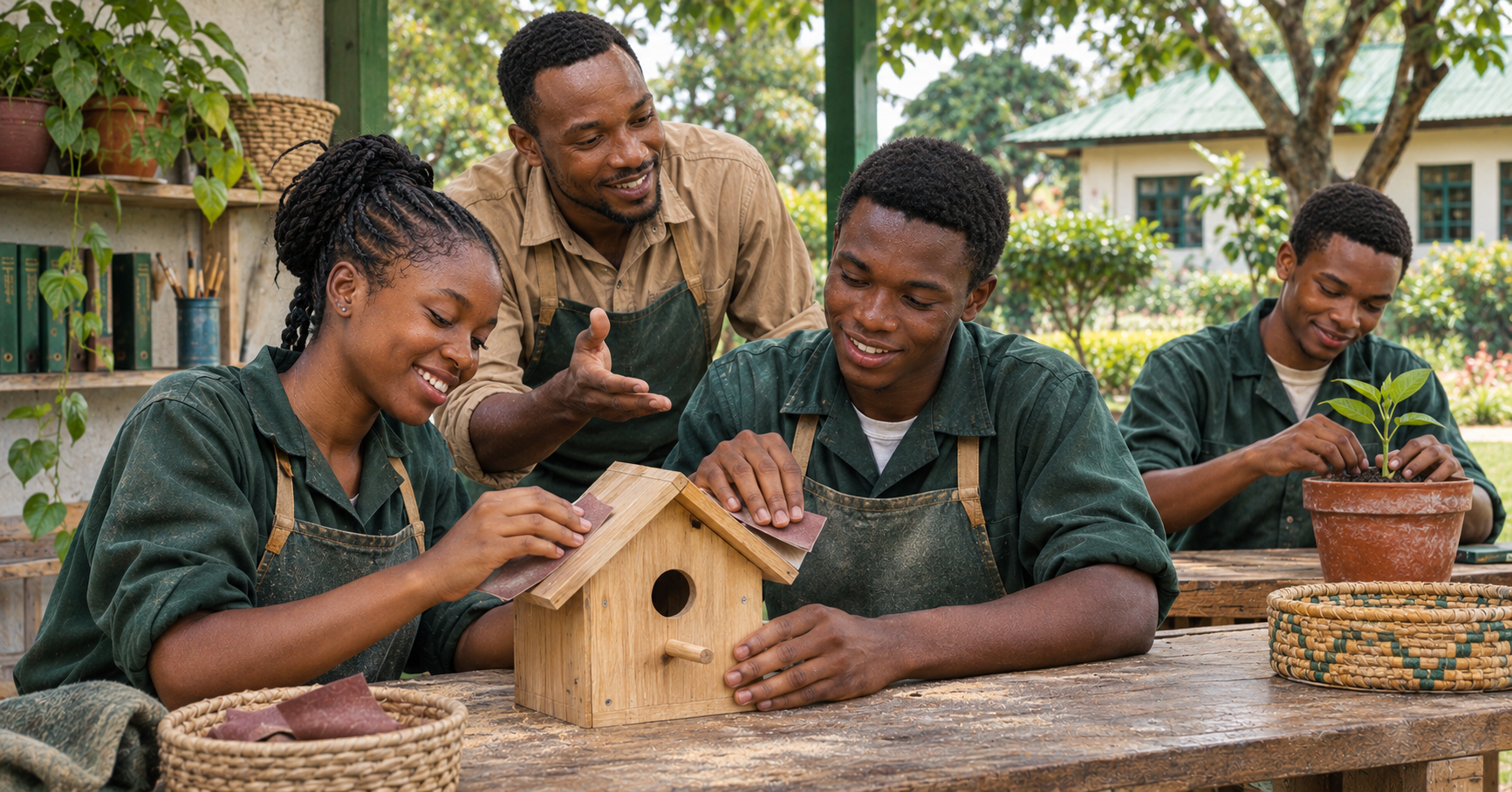
Learning a practical skill can give rehabilitation a tangible focus. Completing a task, caring for tools, following safety instructions and working alongside others create opportunities to practise patience, responsibility and teamwork.
At Sanctuary Gardens, vocational skills training forms part of our holistic rehabilitation approach. Practical activities can help young people discover strengths, experience progress and explore constructive goals for the future. Activities should be appropriate to age, ability and safety needs, and support continued education.
Skills training works alongside therapy, family support and ongoing care. Together, these elements aim to help young people build a sense of purpose and prepare for greater participation in community life.
Making a difference through joined-up care
Sanctuary Gardens’ contribution is to bring these strands of support together: understanding the person, addressing identified needs, encouraging responsibility and building practical capabilities. Our aim is to offer young people and their families a constructive route forward.
Progress looks different for each person. Meaningful goals may include improved family relationships, safer responses to conflict, renewed engagement with education and consistent participation in purposeful activities. These are goals to work towards, rather than promises of a particular outcome.
Reach out before a crisis
If you are concerned about a young person’s behaviour, you do not have to navigate it alone. Contact Sanctuary Gardens to discuss the situation and explore an appropriate assessment or referral.
Early support can open the door to a different future.
Restoring Minds. Renewing Lives.